Eknives, an enterprise EDC knife retailer, was losing sales to competitors due to slow manual processes for showcasing new product drops—a critical factor in the time-sensitive knife enthusiast market.
Through comprehensive user research and behavioral analysis, I identified that both customers and the merchant needed a dramatically simplified new product lifecycle, leading to the design of an automated merchandising system using an Atom8 integration. The solution automated 70% of product management tasks while creating a mobile-first experience that prioritized new arrivals, restocks, and brand discovery.
This transformation enabled Eknives to compete effectively with larger retailers while saving their team countless hours of manual work.
Roles I played:
Design, Project Management
Timeframe:
2022-2023
Business Model:
B2C
User:
Ecommerce Shoppers, Ecommerce Merchant
+23%
Increase In Mobile Conversion Rate
47%
Increase In Sitewide Engagement Rate
Defining the problem
In the everyday carry (EDC) knife community, timing is everything. When a coveted new blade drops, enthusiasts don’t wait—they buy from whoever can get them through checkout first. For Eknives, an enterprise BigCommerce retailer with a substantial daily traffic stream, this reality was becoming a competitive nightmare.
Despite having their own experienced team managing the website, they were losing the race. Their legacy theme was clunky, requiring manual workarounds that slowed everything down. By the time they could showcase a new product drop, their competitors had already captured the sales. The customer experience wasn’t much better—visitors would arrive hunting for the latest releases, only to find empty category pages and outdated product displays.
The stakes were clear: evolve or watch customers walk away to faster competitors.
The Merchant's Dilemma
Clayton, the store owner, painted a vivid picture of his daily struggles. Picture this: a highly anticipated knife drops, hundreds of eager customers flood the site, and within hours it’s sold out. But the real challenge begins after that moment—how do you keep those customers engaged when the product they wanted is gone?
His team was wrestling with manual processes at every turn:
Products going out of stock meant losing visibility and traffic
Popular knife brands were buried in navigation, missing merchandising opportunities
Rich product content was driving traffic but potentially interfering with purchase flow
New product launches required extensive manual coordination
What the Data Revealed
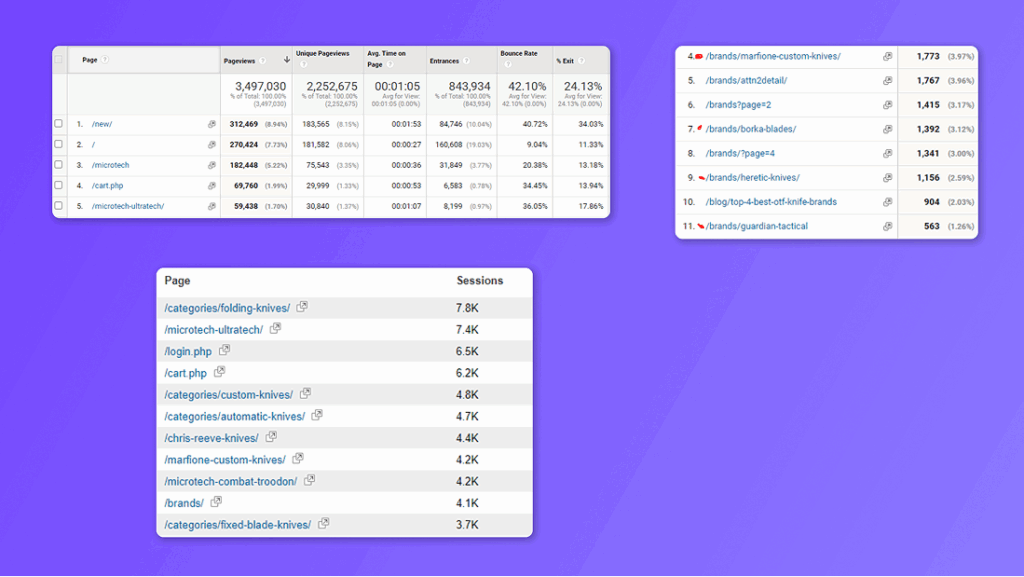
The analytics told a story of missed opportunities. The numbers were stark—most users made a beeline for the “New Arrivals” category, but the dropout rate there was devastating. These weren’t casual browsers; they were motivated buyers who came looking for something specific, didn’t find it, and left immediately.
Even more telling: homepage sessions were converting at half the site-wide rate. The front door of the business was failing to guide customers toward what they actually wanted.
Diving Deeper with Behavioral Research
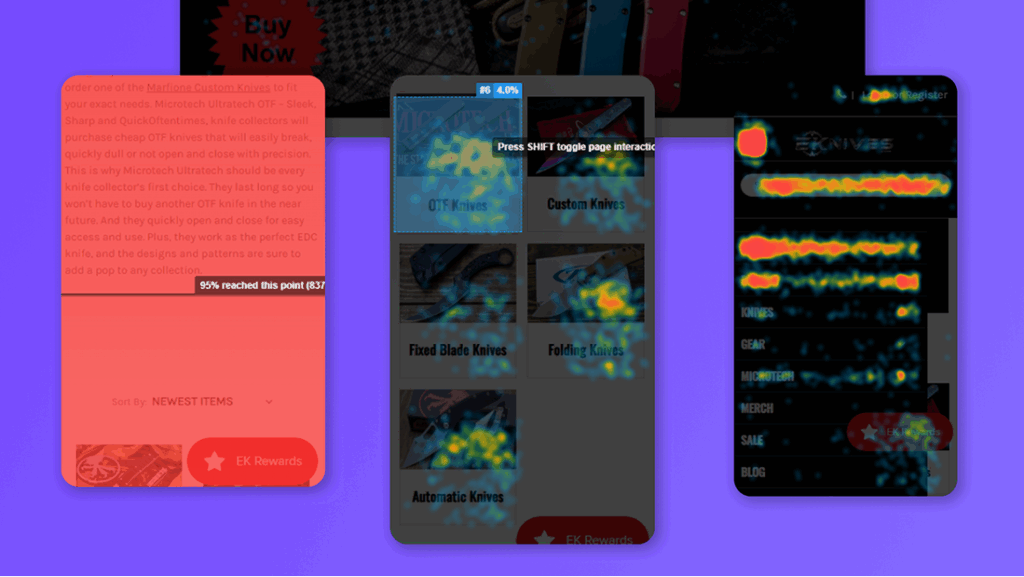
Heat mapping and session replays revealed fascinating contradictions to our initial assumptions. That rich product content Clayton worried was getting in the way? Users were actually engaging with it heavily. The subcategory tiles that seemed to push products down the page? They were critical navigation tools getting significant interaction.
But the data also confirmed our suspicions about brand discovery—while popular knife brands attracted attention, most users preferred shopping by knife type and category. The challenge wasn’t just about featuring brands; it was about making the entire discovery process more intuitive.
The Technical Foundation
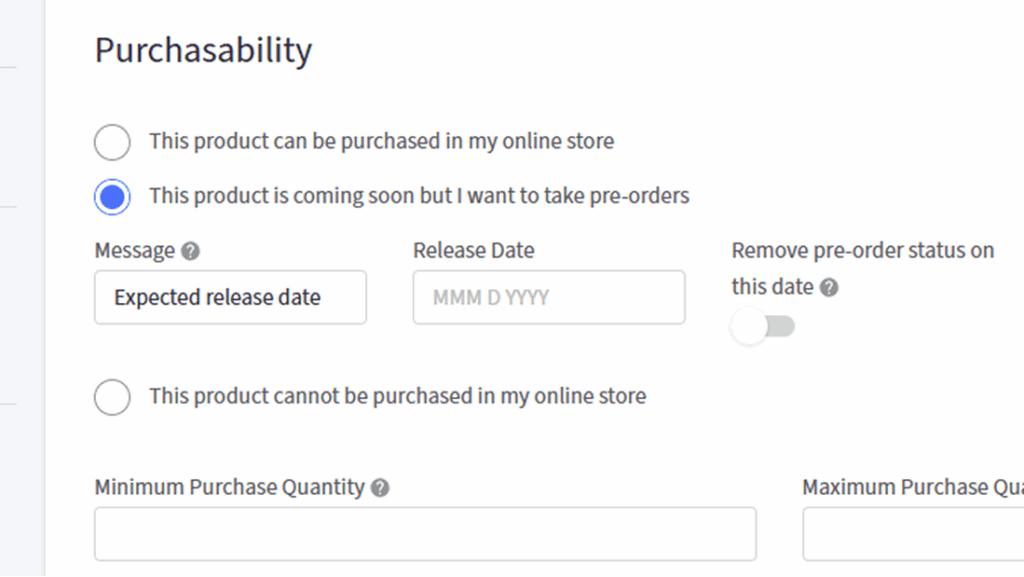
Understanding BigCommerce’s capabilities became crucial to our solution. The platform offered two key features that would become the foundation of our approach:
Stock Management Flexibility: Products could remain visible even when out of stock, allowing for pre-orders and maintaining SEO value. Integration with tools like InStock Notify meant capturing customer emails and building marketing funnels around anticipated restocks.
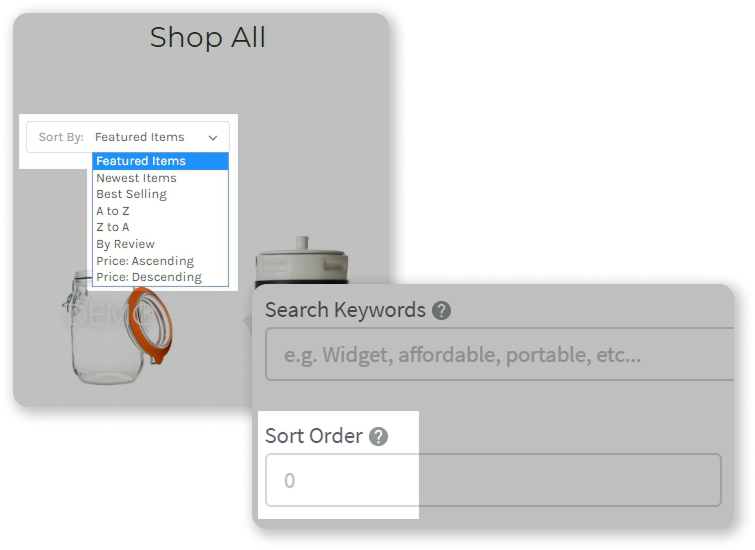
Sort Order Control: Every product had a controllable sort order parameter that determined its position on listing pages. This granular control opened possibilities for automated merchandising that most merchants weren’t leveraging.
These weren’t just technical details—they were the building blocks for transforming how Eknives could respond to market demands.
Connecting the Dots
The research revealed an elegant insight: both merchants and customers needed the new product lifecycle to be dramatically easier. Customers needed faster discovery of new arrivals and better restock notifications, while merchants needed automated product management that wouldn’t break under pressure.
We also discovered that brands weren’t being engaged with because they weren’t accessible site-wide, not because customers didn’t want them.
Engineering the Solution
This project required deep collaboration with our engineering lead to architect something that could meet the merchant’s ambitious goals. The key breakthrough came in identifying Atom8 by Grit Global as our automation partner.
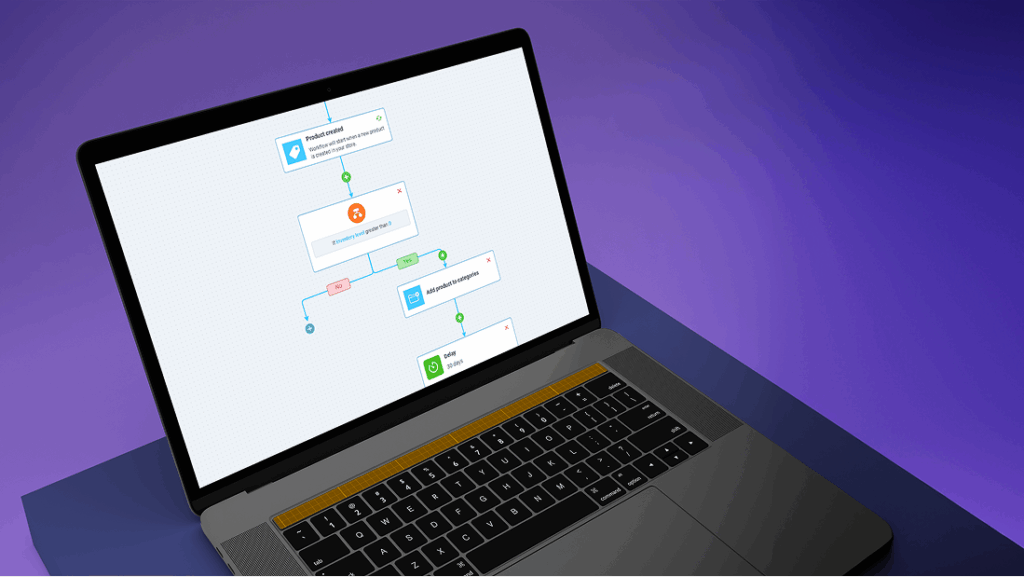
The vision was ambitious: automatically adjust product metadata—sort order, category assignments, purchase settings—based on stock conditions and predefined rules. When a product launched, it would automatically surface in prime positions. When it sold out, it would gracefully transition to a restock-friendly display state.
This wasn’t just about making the current process faster; it was about reimagining how an EDC retailer could respond to market dynamics in real-time.
Designing for Mobile-First Reality
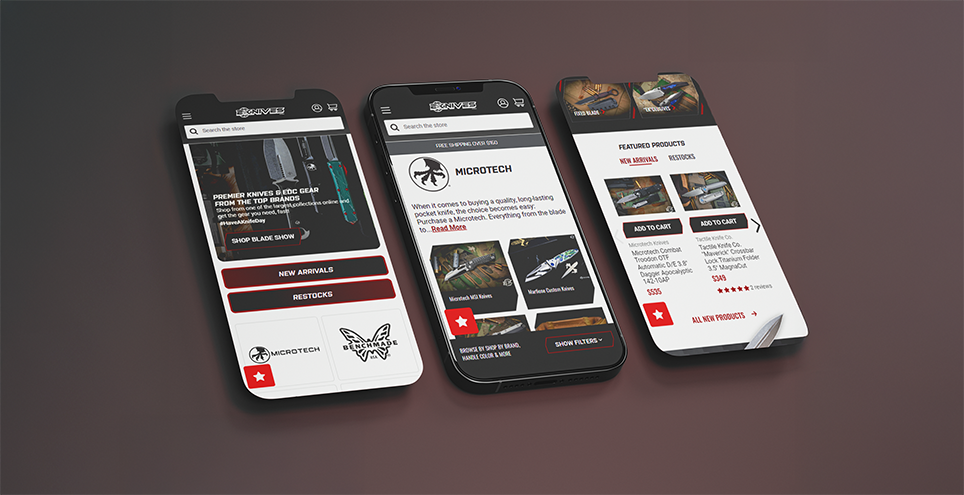
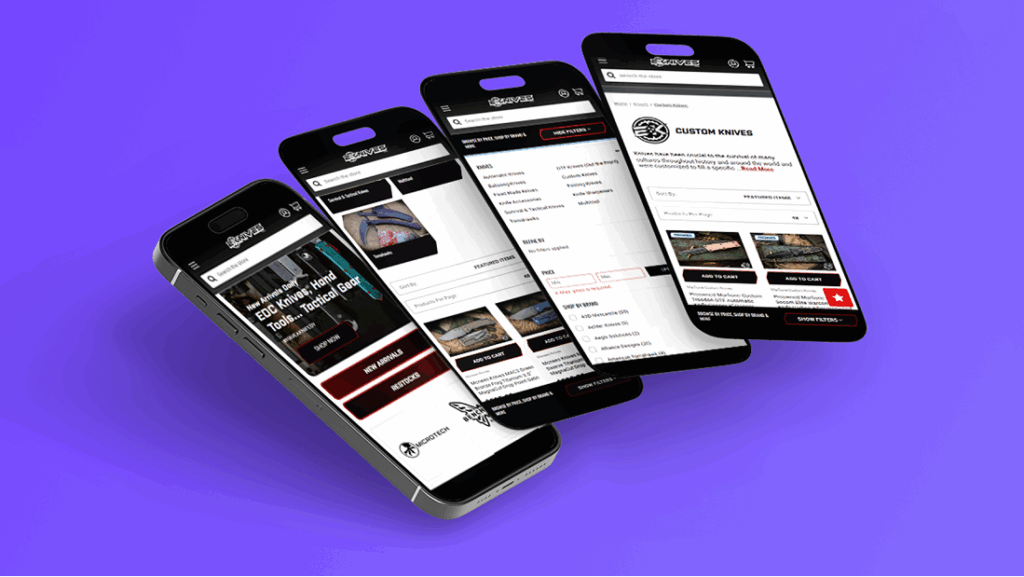
With the vast majority of traffic coming from mobile devices, every design decision prioritized the phone experience. The homepage redesign focused on getting users to their destination faster—new arrivals, restocks, and popular brands needed to be immediately accessible within the opening fold.
The navigation strategy centered around a sticky category system that followed users through their browsing journey. No more getting lost in deep category structures or losing their place while filtering products.
Those subcategory tiles that performed so well in our behavioral research? We kept them, but optimized their placement. The rich product content that drove traffic but concerned Clayton? We collapsed it into accordion tabs—still discoverable for users who wanted it, but no longer dominating the product viewing experience.
Every design choice reflected our research findings while solving the merchant’s operational challenges.
The Automation Revolution
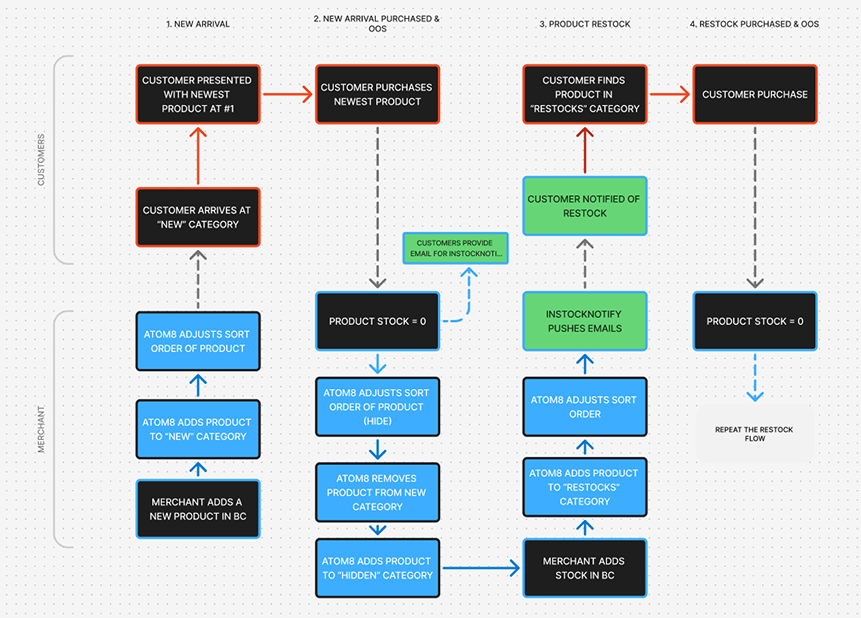
The technical diagram we created became a roadmap for transformation. Color-coded to distinguish merchant actions from automated processes, it revealed the potential for dramatic efficiency gains.
Here’s how the new lifecycle worked:
Product Launch: New inventory automatically surfaces in prime category positions High Demand: Popular items maintain visibility even as stock fluctuates
Sellout: Products seamlessly transition to restock notification mode
Restock: Returning inventory automatically reclaims featured positioning
The beauty of this system? Atom8 handled 70% of the entire process automatically. What previously required constant manual intervention now ran itself, freeing Clayton’s team to focus on strategy rather than tactical updates.
Impact and Transformation
+23%
Increase In Mobile Conversion Rate
47%
Increase In Sitewide Engagement Rate
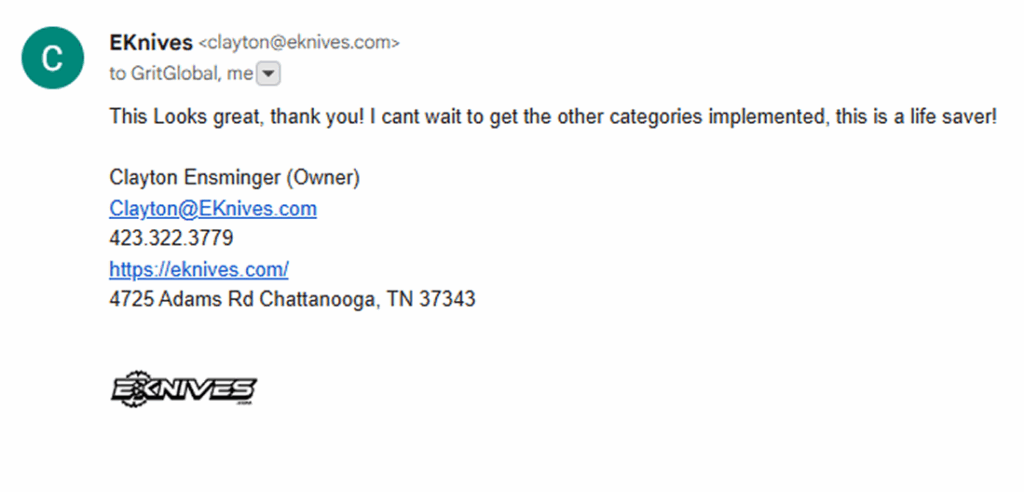
The numbers tell part of the story, but the merchant feedback tells the whole story. Clayton and his team gained back countless hours previously spent on manual product management. The automation workflows gave them confidence that their site would stay current with market demands without constant oversight.
More importantly, they could now compete on equal footing with larger competitors who had dedicated technical teams. The playing field had been leveled through smart automation and strategic design.
Lessons Learned
This project reinforced the power of questioning initial assumptions. Content that seemed problematic actually drove engagement. Navigation elements that appeared to clutter the interface were crucial for user success. Sometimes the solution isn’t removing friction—it’s understanding which friction serves a purpose.
The technical foundation of any UX solution matters enormously. Understanding platform capabilities and limitations early allows for more innovative problem-solving rather than surface-level improvements.
Most crucially: in fast-moving markets, automation isn’t a luxury—it’s a competitive necessity. The retailers who can respond fastest to market changes will capture the most motivated customers.